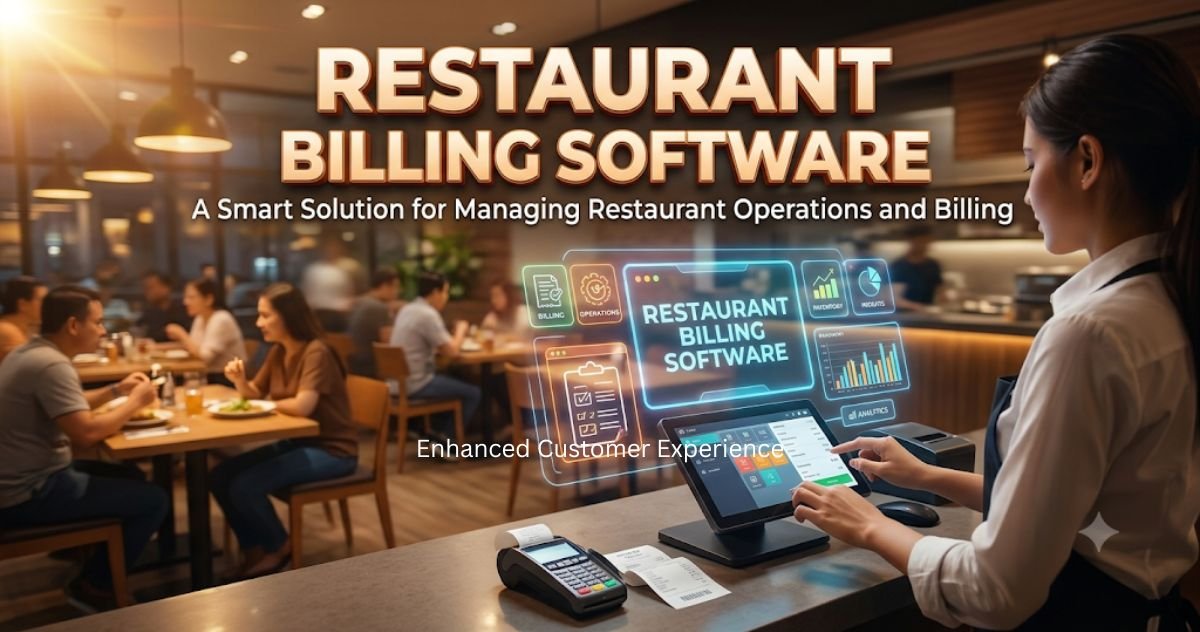
Running a restaurant involves much more than just preparing delicious food and serving it to customers. Restaurant owners must manage a wide range of tasks, including daily orders, table reservations, kitchen operations, inventory, staff activities, customer payments, and billing. Handling all these tasks manually can be extremely time-consuming and increases the risk of errors. This is where restaurant billing software becomes an essential tool for modern restaurants, cafés, hotels, and food businesses.
- With the help of digital billing technology, restaurant owners can streamline their daily operations, provide better service to customers, and maintain greater control over their business.
2) What is Restaurant Billing Software?
Restaurant billing software is a digital solution designed to manage restaurant billing, food orders, payments, inventory, and sales records—all from a single system. It assists restaurant staff in generating accurate bills, tracking customer orders, managing tables, and monitoring day-to-day business activities.
- Whether you operate a small restaurant, a fast-food outlet, a café, or a food business with multiple branches, the right restaurant management system can make your daily operations faster and more organized.

3) Why Do Restaurants Need Billing Software?
Managing multiple orders simultaneously during peak hours can be challenging. Traditional billing methods are prone to calculation errors, the risk of orders getting mixed up or lost, and delays in processing payments. - Restaurant billing software helps address these challenges by automating essential business operations.
Here are some of its key benefits:
- Faster Billing: Generate customer bills in seconds and reduce wait times.
- Accurate Payments: Automatically calculate food prices, taxes, discounts, and the total amount due.
- Order Management: Track dine-in, takeaway, and online food orders.
- Sales Tracking: View daily, weekly, and monthly sales reports.
- Inventory Control: Monitor the availability of ingredients and stock.
- Enhanced Customer Experience: Provide faster service to customers through streamlined order processing.

4) Key Features of Restaurant Billing Software
Choosing software with the right features can help a restaurant manage its operations more effectively.
#1. Quick POS Billing System
A restaurant POS (Point of Sale) billing system enables staff to generate bills quickly using a computer, tablet, or POS terminal. It automatically calculates item prices, applicable GST, discounts, and the final amount to be paid.
#2. Table and Order Management
Digital order tracking makes it easy to manage multiple tables. Restaurant staff can see which tables are vacant, assign orders, and track the status of each customer's order.
#3. Kitchen Order Management
With kitchen order management, food orders are sent directly to the kitchen. Chefs can view incoming orders and prepare dishes based on priority. This reduces communication gaps between the service staff and the kitchen team.
#4. GST Invoice Generation
The GST billing feature allows restaurants to generate invoices that include the calculation of applicable taxes. This makes it easier to keep billing records organized and also assists with accounting and tax-related reporting.
#5. Inventory and Stock Management
With the help of inventory management, restaurant owners can keep track of ingredients, beverages, packaging materials, and other essential items. Stock tracking reveals when the inventory for a particular item is running low, which helps prevent unnecessary wastage.
#6. Sales and Business Reports
Through detailed reports, restaurant owners can analyze daily sales, top-selling food and beverage items, payment methods, and overall business performance.
5) How does restaurant billing software increase business productivity?
A restaurant involves many simultaneous tasks, especially during lunch and dinner hours. Relying on separate registers for orders, payments, and inventory can make management difficult.
- Restaurant billing software consolidates all these tasks onto a single platform. Staff can process customer orders, generate invoices, and update sales records without the need for excessive paperwork.
- Business owners can monitor restaurant activities through digital reports and identify operational challenges. This saves time, improves coordination, and enables management to make better, more informed business decisions.