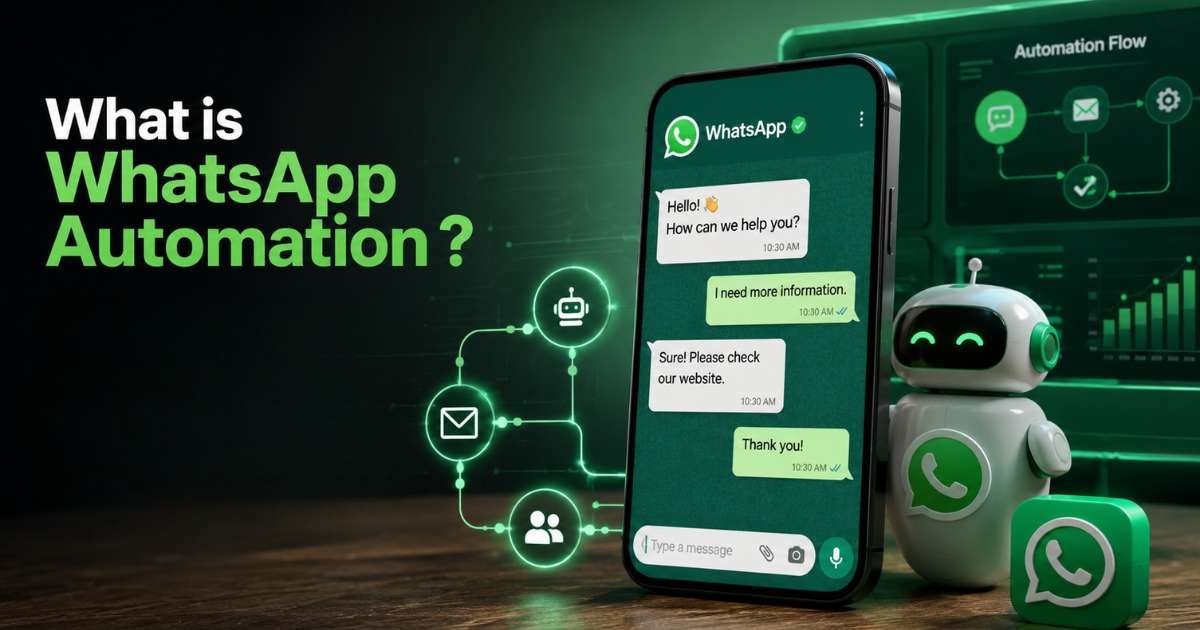
WhatsApp automation involves using automated messages, chatbots, and workflows to manage interactions with customers on WhatsApp.
- Businesses can set up automated greetings, instant replies, order confirmations, appointment reminders, and answers to frequently asked questions (FAQs).
- This ensures that customers receive timely information even when business owners are unavailable.

2) Benefits of WhatsApp Automation?
1. Improved Customer Engagement
- Customers prefer messaging because it is convenient and fast.
- Automated replies provide instant support, reducing wait times and increasing customer satisfaction.
2. Enhanced Operational Efficiency
- Automation reduces the need to manually answer frequently asked questions.
- Common queries—such as business hours, pricing, product availability, and delivery updates—can be handled automatically, allowing staff to focus on more critical tasks.
3. Better Lead Generation and Sales
- Automated workflows help guide customers through the purchasing process.
- Businesses can send personalized offers, promotional messages, abandoned cart reminders, and follow-up messages to boost sales and improve conversion rates.
4. Appointment and Order Management
- Service-based businesses can automate appointment confirmations and reminders.

3) Key Features of WhatsApp Automation?
- Automated Greetings
Welcome messages create a positive first impression and ensure customers receive an immediate response.
- Quick Replies
Businesses can store pre-written responses for frequently asked questions, saving time and ensuring a consistent experience.
- Chatbots
AI-powered chatbots can answer customer queries, gather information, and provide round-the-clock support.
- Broadcast Messaging
Businesses can send promotional offers, announcements, and updates to multiple customers simultaneously.
4) Challenges and Best Practices
1) Avoid Excessive Automation
- While automation is beneficial, an over-reliance on automated responses can make conversations feel impersonal. Human support should be available when customers require personalized assistance.
- Maintain Clear Communication
Automated messages should be concise, friendly, and tailored to customer needs.
- Respect Customer Privacy
Businesses should obtain customer consent before sending promotional messages and must comply with data privacy regulations.